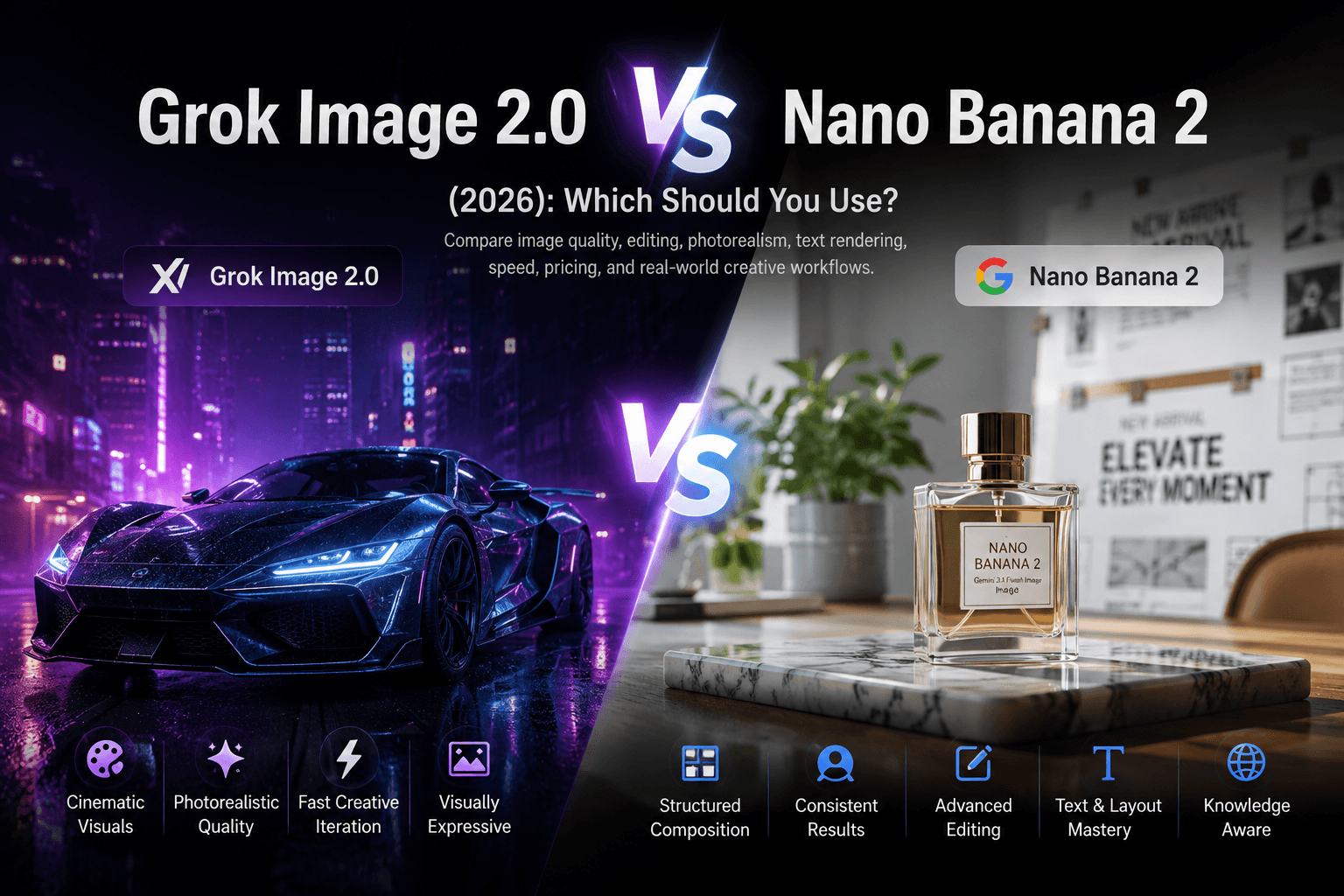
Choosing between Grok Image 2.0 and Nano Banana 2 is less about finding the model with the longest feature list and more about understanding what kind of images you actually create.
The two models approach image generation differently.
Grok Image 2.0 is particularly compelling for photorealistic, cinematic, and visually expressive generation. Nano Banana 2 is stronger when a workflow demands structured composition, consistent editing, contextual understanding, or text-heavy design.
That distinction makes this comparison more interesting than a simple benchmark battle.
Instead of asking which model is universally better, let's find out which one fits your workflow better.
The 30-Second Answer
Here is the simplest way to think about the Grok Image 2.0 vs Nano Banana 2 comparison:
Pick Grok Image 2.0 for:
- Photorealistic hero images
- Cinematic scenes
- Creative advertising
- Product campaign concepts
- Artistic experimentation
- Fast visual ideation
- Dramatic lighting and atmosphere
Pick Nano Banana 2 for:
- Complex multi-object scenes
- Character consistency
- Image editing
- Text-heavy graphics
- Product mockups
- Knowledge-aware generation
- Structured commercial layouts
At a Glance
| If You Care Most About... | Better Choice |
|---|---|
| Cinematic visual quality | Grok Image 2.0 |
| Photorealistic creative images | Grok Image 2.0 |
| Artistic range | Grok Image 2.0 |
| Complex instruction following | Nano Banana 2 |
| Character consistency | Nano Banana 2 |
| Long editing workflows | Nano Banana 2 |
| Text-heavy layouts | Nano Banana 2 |
| Creative experimentation | Grok Image 2.0 |
Grok Image 2.0 = Visual Creativity
Nano Banana 2 = Structured Control
That is the main difference to keep in mind throughout this comparison.
Meet the Two Models
Before comparing output quality, it helps to understand what each model is trying to do.
Grok Image 2.0
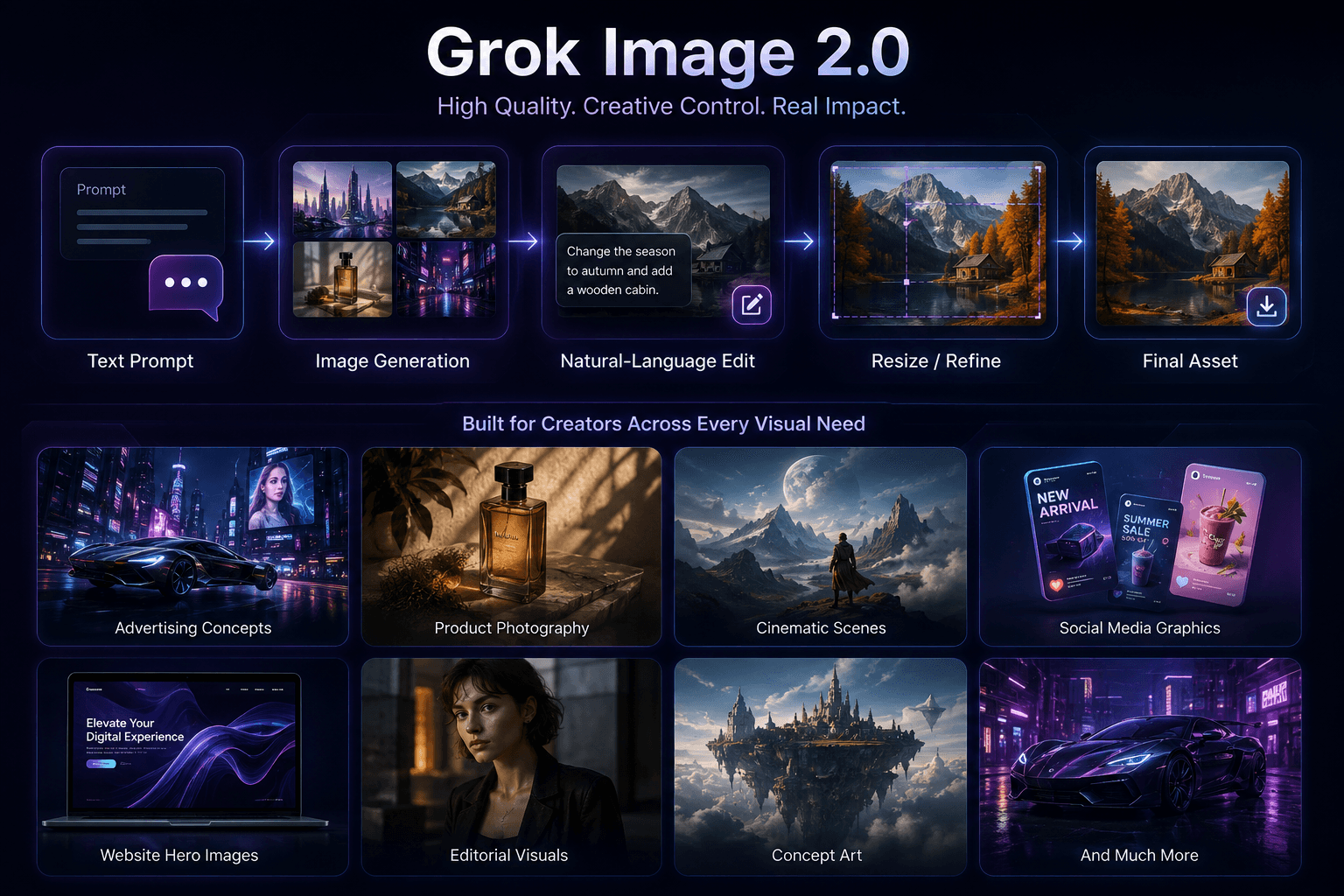
Grok Image 2.0 refers here to the latest Grok Imagine Image 2.0 generation used for AI image creation.
The model places significant emphasis on visual quality and practical creative control.
Its workflow can cover tasks such as:
Text Prompt → Image Generation → Natural-Language Edit → Resize / Refine → Final Asset
That makes it suitable for creators who move quickly between ideas rather than treating every prompt as a one-shot generation.
Typical applications include:
- Advertising concepts
- Product photography
- Cinematic scenes
- Social media graphics
- Website hero images
- Editorial visuals
- Concept art
The strongest reason to use Grok Image 2.0 is its ability to produce images with immediate visual impact.
Nano Banana 2
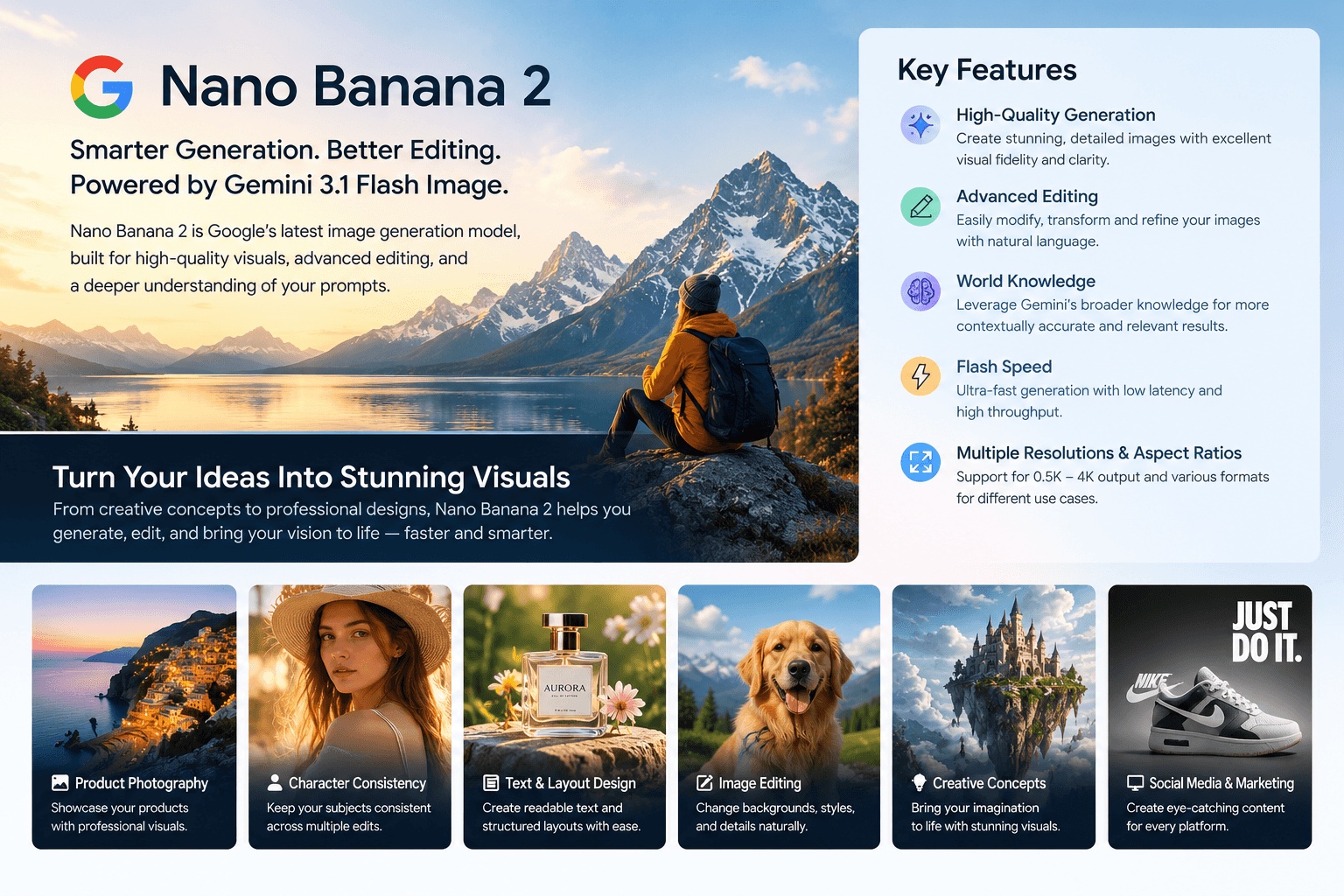
Nano Banana 2 is Google's Gemini 3.1 Flash Image model.
It is positioned as the faster, high-efficiency counterpart to Google's higher-end Gemini image models while retaining advanced generation and conversational editing capabilities.
Nano Banana 2 also benefits from the broader Gemini architecture.
This becomes important when a prompt requires the model to understand relationships between objects, contextual information, or a sequence of edits rather than simply create an attractive standalone image.
It supports multiple resolutions and aspect ratios and is designed for high-volume image-generation workflows.
Round 1: Which Produces Better-Looking Images?
Let's start with the question most users care about first.
Which model actually makes better images?
The answer depends on what you mean by "better."
Consider this prompt:
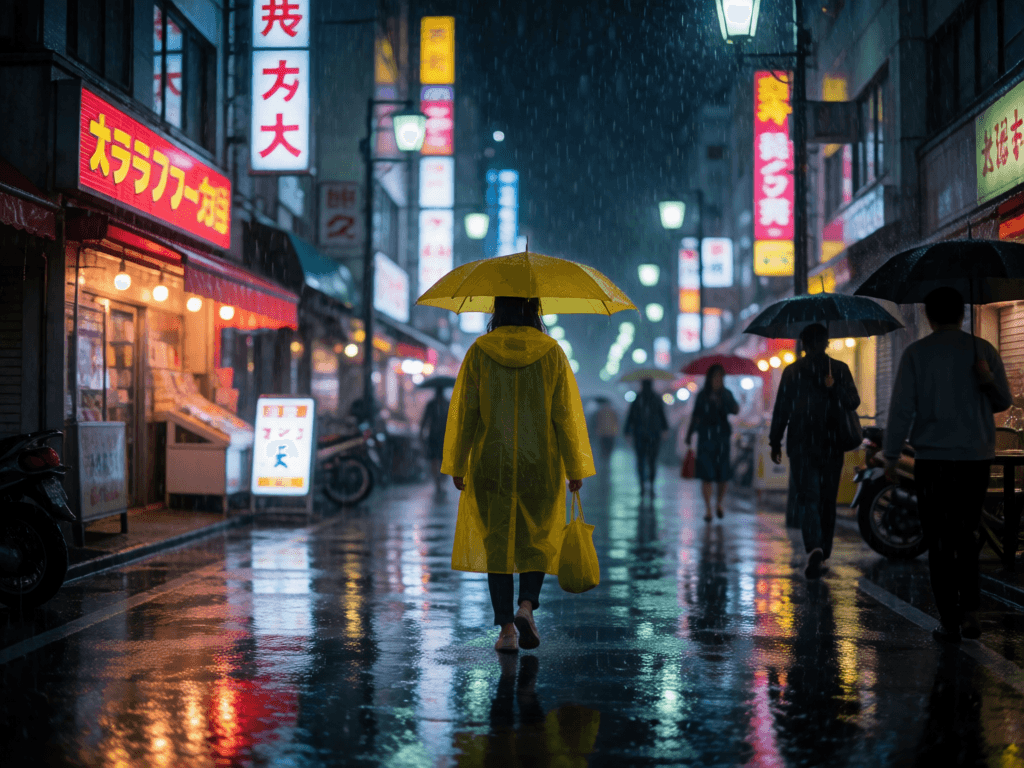
A rainy Tokyo street at night, neon signs reflecting across wet pavement, a woman in a yellow raincoat walking away from the camera, cinematic photography, realistic rain, shallow depth of field.
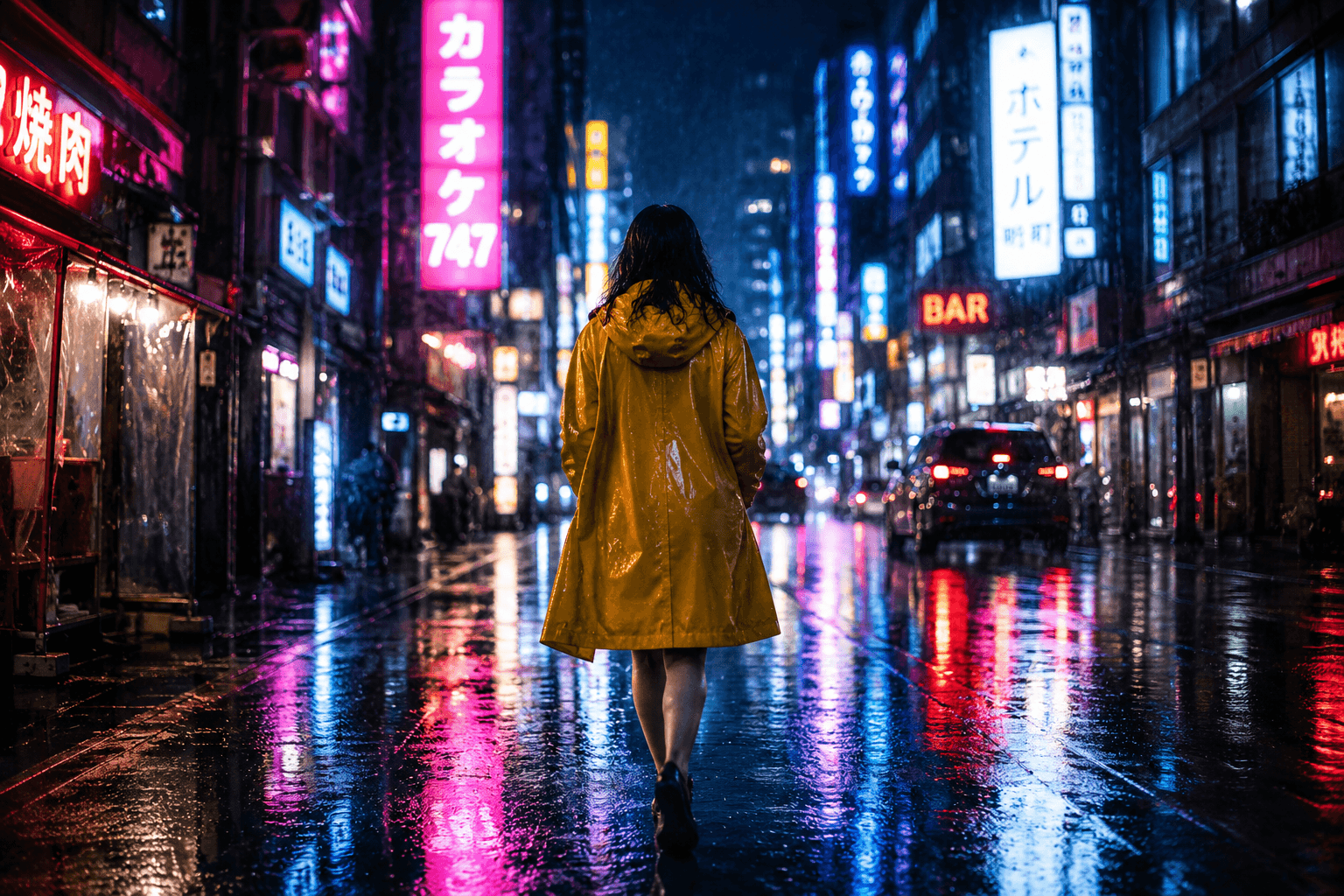
Grok Image 2.0
Nano Banana 2
Grok Image 2.0 tends to excel when the prompt leaves room for visual interpretation.
Lighting, reflections, atmospheric depth, contrast, and cinematic framing can become particularly expressive.
Nano Banana 2 often approaches the same scene differently.
Its strength is more likely to appear in the logical relationship between the elements: where the subject stands, how objects relate to the environment, and whether the requested scene remains structurally coherent.
So there are really two winners here.
Best for cinematic impact: Grok Image 2.0
Best for compositional logic: Nano Banana 2
For website heroes, entertainment visuals, concept art, and visually dramatic campaigns, we would lean toward Grok.
Round 2: What Happens When the Prompt Gets Complicated?
A beautiful image is relatively easy.
A beautiful image containing six correctly positioned objects is much harder.
Try this:
A modern creative workspace with a silver laptop centered on a wooden desk, green ceramic coffee cup on the left, three books stacked on the right, small plant behind the laptop, large windows showing a rainy city outside, warm desk lamp from the right, realistic photography, no people.
Now the models must understand:
object + count + color + position + environment + lighting


This type of prompt exposes one of Nano Banana 2's most useful strengths.
Its Gemini foundation helps when many instructions need to remain connected inside the same composition.
Grok Image 2.0 can still produce the more visually exciting result, but strict spatial instructions may compete with its creative interpretation.
Round Winner: Nano Banana 2
If your prompts often contain phrases such as:
"behind the product" "exactly three objects" "keep this on the left" "do not change the background"
Nano Banana 2 is likely the safer choice.
Round 3: Editing Is Where the Difference Gets Interesting
Generating an image is only half of many real creative workflows.
The next question is:
Can you change it without destroying everything that already works?

Start with the same portrait and ask:
Replace the office background with a golden-hour Paris café terrace. Keep the person's face, hairstyle, expression, clothing, pose, and camera angle unchanged.
Grok Image 2.0
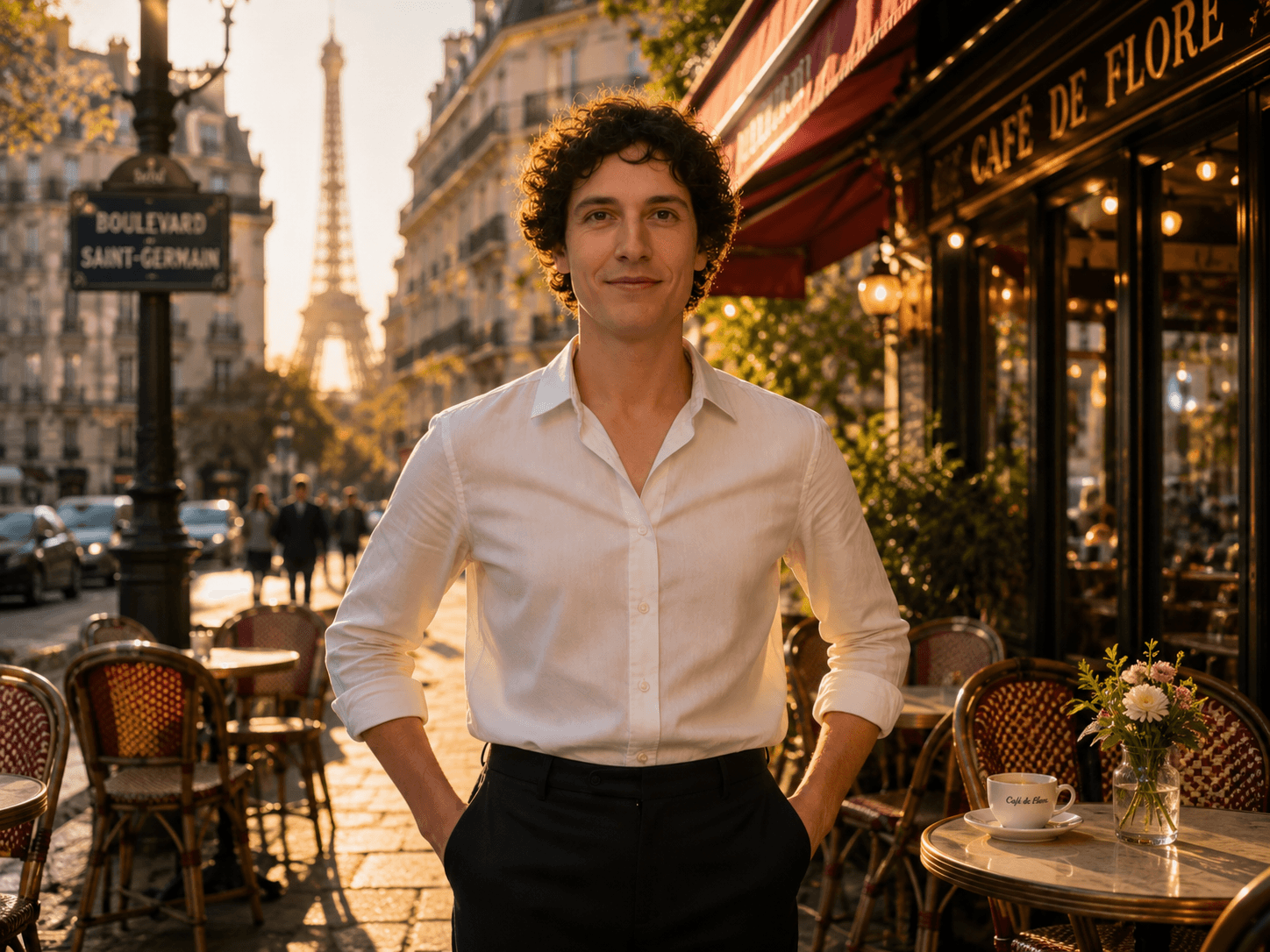
Grok Image 2.0 is well suited to direct natural-language changes.
You can make requests such as:
Make the background warmer. Change the jacket to dark green. Reframe this for a widescreen banner.
That makes it particularly useful for quick creative editing.
Nano Banana 2
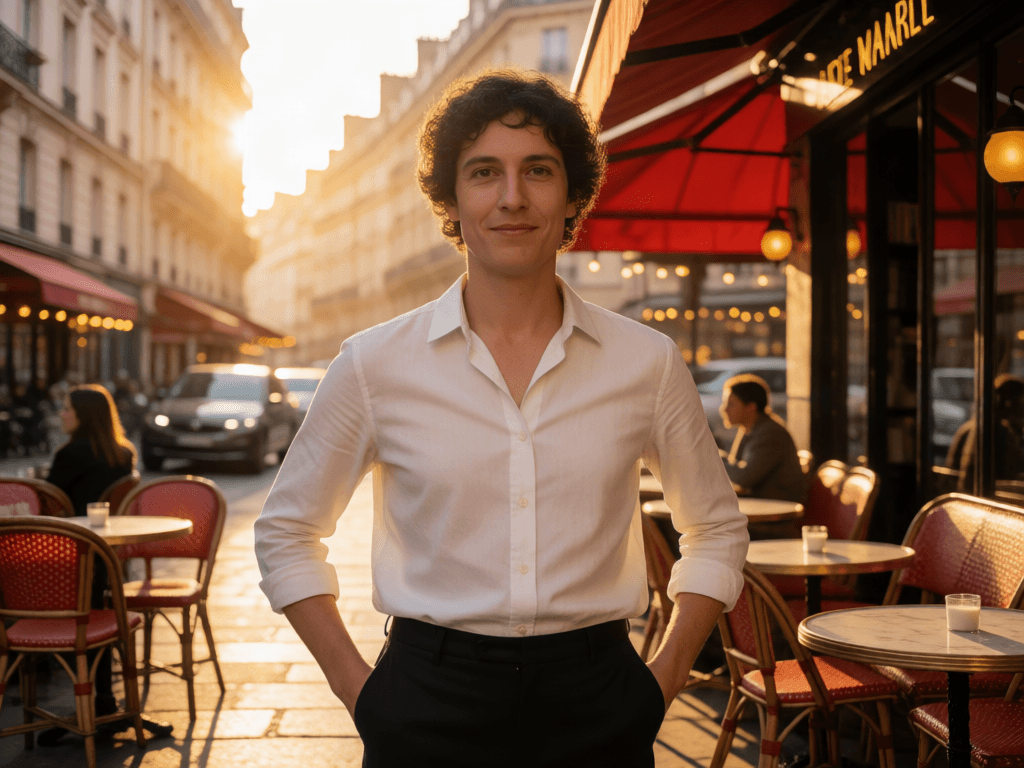
Nano Banana 2 becomes especially interesting when the editing session gets longer.
Imagine creating:
Original → Office → Café → Hotel → Outdoor → Advertisement
while trying to keep the same character recognizable throughout every version.
Consistency across a sequence of changes is an area where Nano Banana 2 is particularly useful.
Round Winner: Nano Banana 2
Grok Image 2.0: excellent for fast individual edits.
Nano Banana 2: better suited to longer consistency-sensitive editing workflows.
Round 4: Can They Actually Write Inside Images?
AI-generated text used to be one of the easiest ways to identify an AI image.
That has changed dramatically.
Use this prompt:
Premium coffee advertisement poster with a dark background. Large headline reading “START YOUR MORNING”. Smaller subtitle reading “FRESHLY ROASTED EVERY DAY”. Minimal luxury commercial layout.
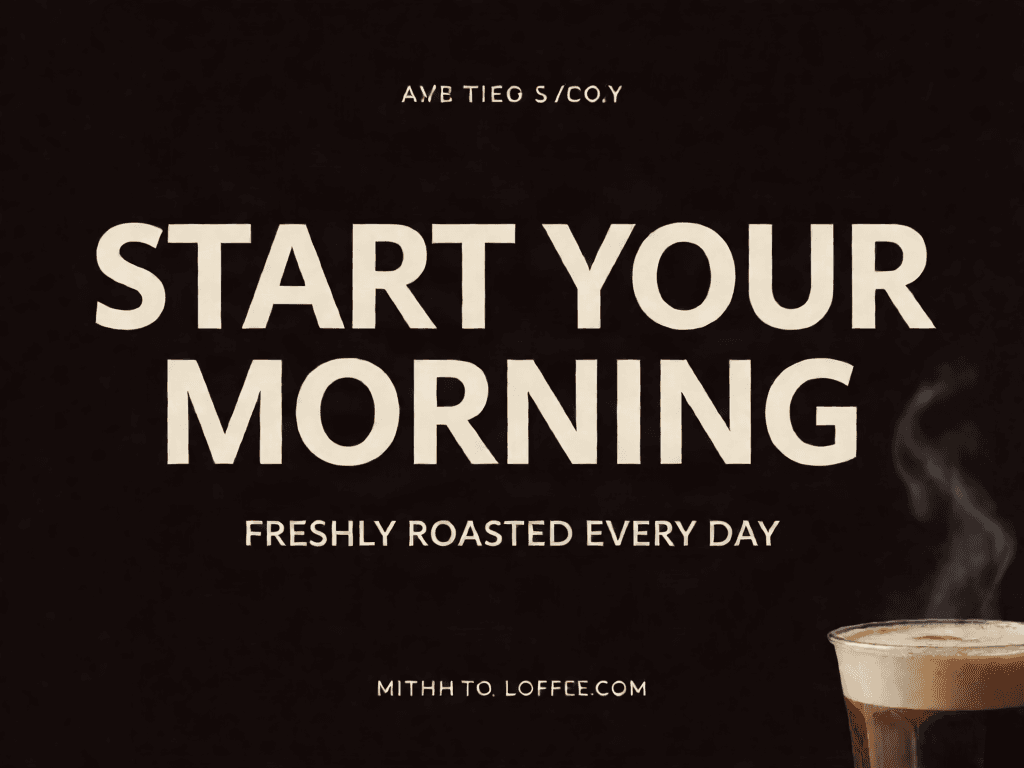
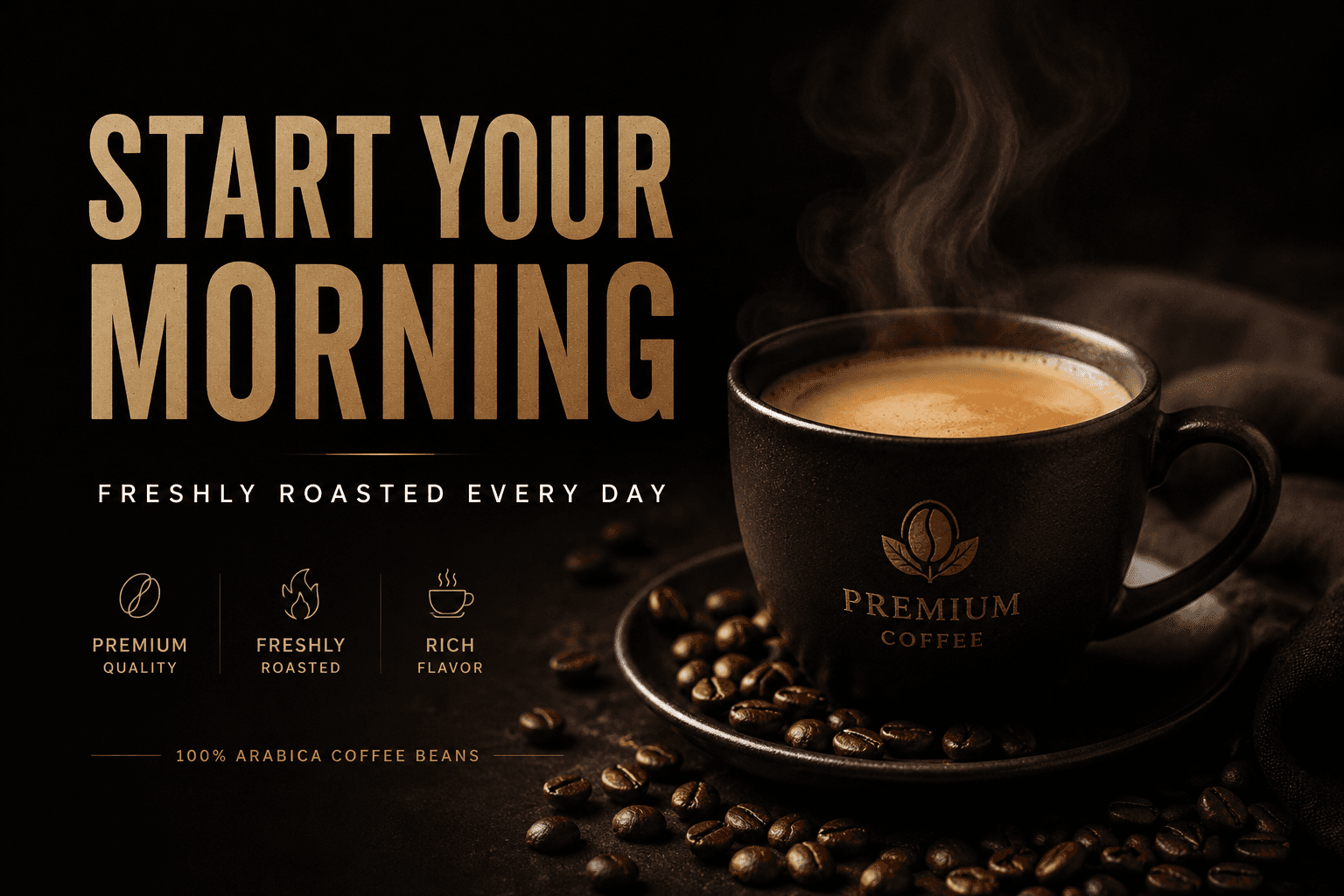
Grok Image 2.0 has improved significantly at short text.
Headlines, labels, signs, and short advertising phrases can be highly usable.
Nano Banana 2 becomes more attractive as the layout becomes complicated.
For example:
Headline + Subtitle + Product Label + Supporting Copy + Structured Layout
requires more than spelling words correctly.
The model needs to understand typography as part of the composition.
Round Winner: Nano Banana 2
For a short headline, the difference may be small.
For text-heavy posters, infographics, and product mockups, Nano Banana 2 has the stronger workflow.
Round 5: Which Model Is More Creative?
Now remove most of the constraints.
Use:
A futuristic luxury sports car parked on a rain-soaked Tokyo street at night, neon reflections across the pavement, subtle fog, dramatic purple and blue lighting, cinematic low-angle photography.
This is where Grok Image 2.0 becomes especially compelling.
Instead of measuring whether the cup is exactly 200 pixels left of the laptop, the task rewards:
- Atmosphere
- Lighting
- Depth
- Drama
- Composition
- Visual personality
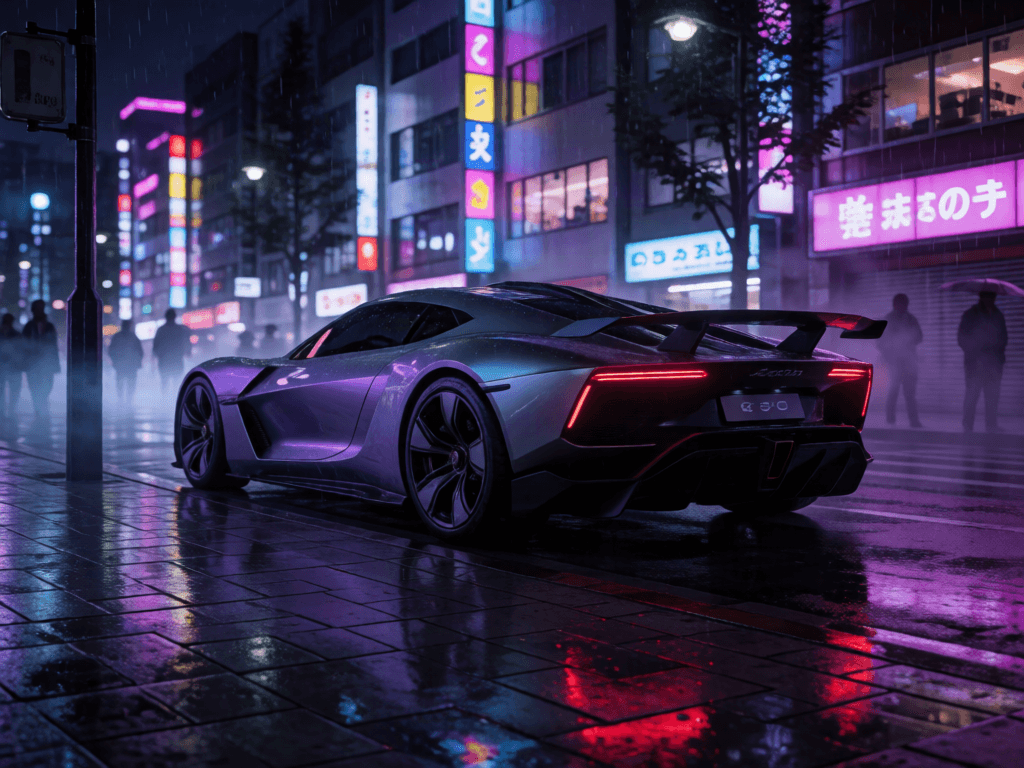
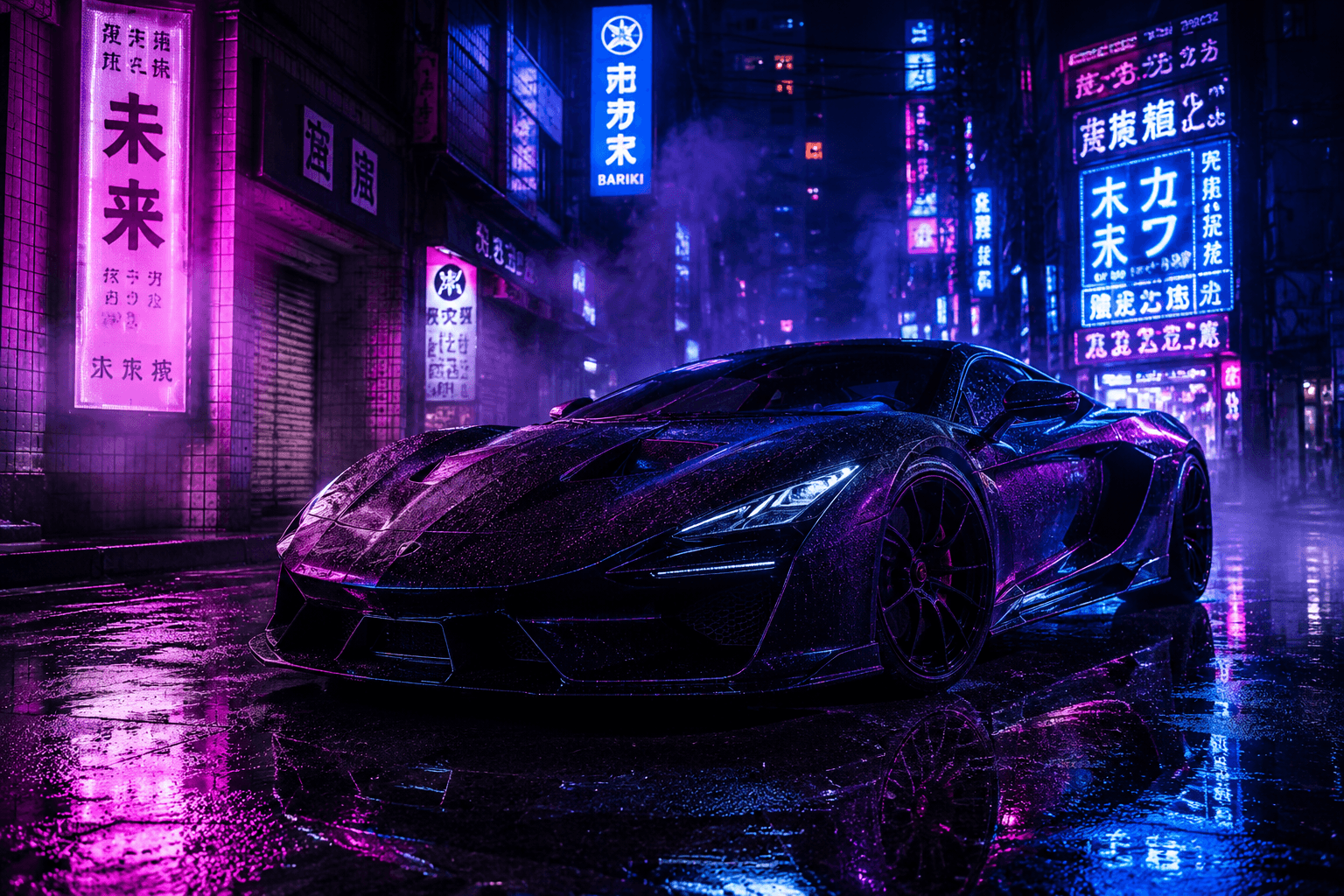
Grok's strength is often most visible when the prompt gives the model room to interpret the idea.
Nano Banana 2 can still generate an excellent scene, but it tends to prioritize coherence over stylistic extremity.
Round Winner: Grok Image 2.0
For cinematic imagery, concept art, advertising inspiration, and visually expressive work, Grok is the model we would try first.
The Difference Becomes Clear in Real Workflows
Instead of comparing abstract capabilities, consider what happens during an actual project.
Workflow A: Creating a Website Hero
You need a dramatic futuristic visual for a landing page.
Your workflow might be:
Idea → 5 visual directions → Pick one → Refine lighting → Export
Better Choice: Grok Image 2.0
Why?
Because creative range and visual impact matter more than strict object consistency.
Workflow B: Creating an Ecommerce Campaign
You have the same model and product appearing across:
- Homepage banner
- Instagram post
- Product page
- Summer campaign
- Lifestyle scene
The person and product need to remain recognizable.
Better Choice: Nano Banana 2
Consistency becomes more valuable than getting the most dramatic first-generation image.
Workflow C: Creating Social Content Every Day
You need thumbnails, promotional graphics, cinematic visuals, and new concepts frequently.
Better Choice: Grok Image 2.0
Fast creative experimentation is the priority.
Workflow D: Building an Infographic
You need several sections, icons, labels, objects, and readable text arranged logically.
Better Choice: Nano Banana 2
Structured composition and typography become much more important.
Speed: Don't Assume Grok Automatically Wins
Speed is one area where comparisons can become misleading.
Nano Banana 2 is specifically positioned by Google as a high-efficiency Flash image model designed for low latency and high-volume workloads.
It also supports output from 0.5K through 4K.
Grok Image 2.0 is also designed for practical, rapid image creation and works well for iterative creative workflows.
Actual generation time can vary significantly depending on:
- Platform
- Resolution
- Traffic
- Generation mode
- API provider
So rather than declaring one universally faster, the practical distinction is:
Grok feels optimized for rapid creative exploration.
Nano Banana 2 is designed for efficient high-volume generation.
Pricing: Grok Image 2.0 vs Nano Banana 2
Pricing also deserves more nuance than simply saying one model is cheaper.
Nano Banana 2's official Gemini API pricing varies by output resolution.
At current published rates, approximate image-output costs are:
| Resolution | Nano Banana 2 |
|---|---|
| 0.5K | $0.045/image |
| 1K | $0.067/image |
| 2K | $0.101/image |
| 4K | $0.151/image |
Your actual Grok Image 2.0 cost depends on the platform and generation option you use.
For users generating through GrokImage20.com, the relevant cost is the credit amount displayed by the generator rather than assuming official API pricing applies directly.
That means the better value depends on your workflow.
For 100 experimental images, cost and speed matter heavily.
For one hero image that will sit on a landing page for six months, output quality matters far more than saving a few cents.
The Decision Matrix
Instead of giving both models arbitrary scores such as 4.7/5, here is a more useful decision table.
| Task | Grok Image 2.0 | Nano Banana 2 |
|---|---|---|
| Cinematic Hero Image | Recommended | Good |
| Photorealistic Creative Scene | Recommended | Excellent |
| Complex Multi-Object Prompt | Good | Recommended |
| Short Text / Headline | Excellent | Excellent |
| Text-Heavy Graphic | Good | Recommended |
This table reveals the actual pattern.
Grok Image 2.0 is usually more compelling when visual expression is the priority.
Nano Banana 2 becomes more compelling when structure and consistency are the priority.
Grok Image 2.0 vs Nano Banana 2: Final Verdict
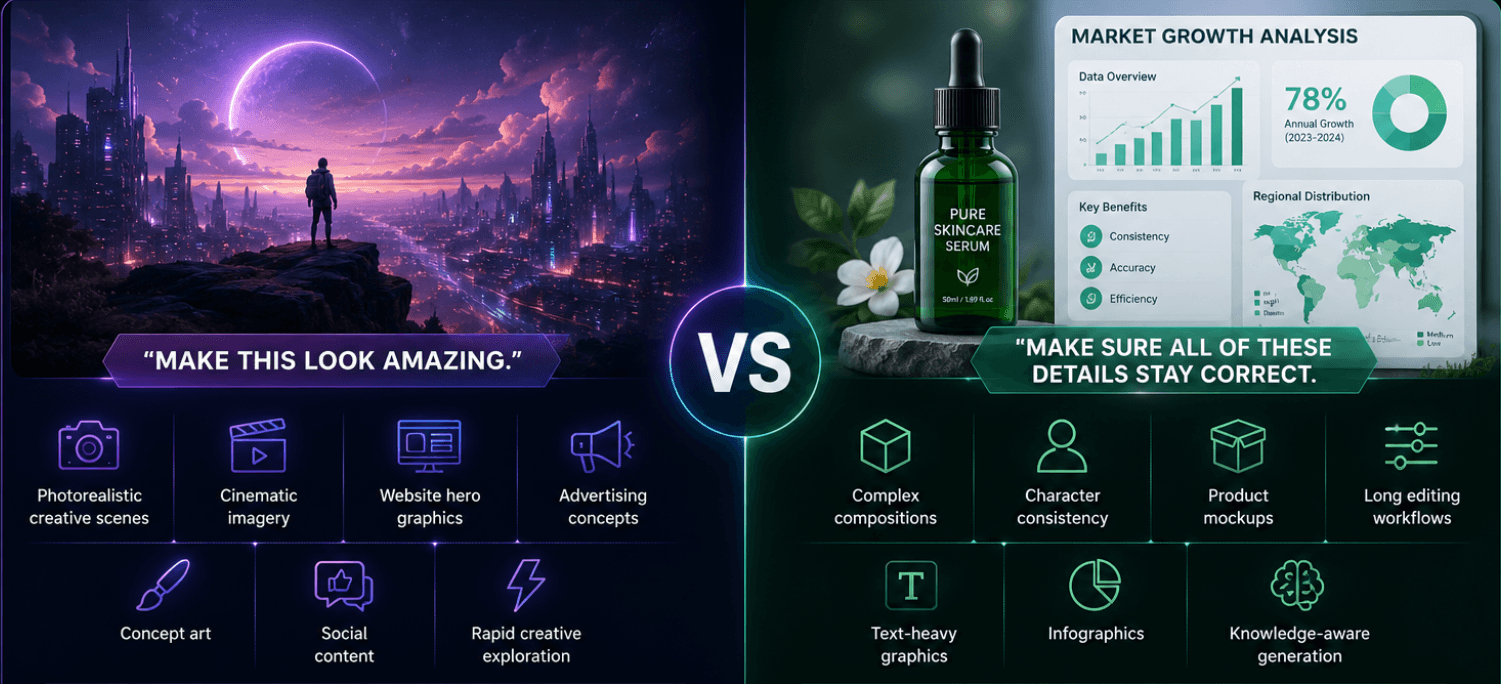
There is no meaningful 10–0 winner here.
The models are simply optimized around different strengths.
Choose Grok Image 2.0 if...
Your creative process starts with:
“Make this look amazing.”
It is particularly compelling for:
- Photorealistic creative scenes
- Cinematic imagery
- Website hero graphics
- Advertising concepts
- Concept art
- Social content
- Rapid creative exploration
Choose Nano Banana 2 if...
Your creative process starts with:
“Make sure all of these details stay correct.”
It is particularly useful for:
- Complex compositions
- Character consistency
- Product mockups
- Long editing workflows
- Text-heavy graphics
- Infographics
- Knowledge-aware generation
Our Recommendation
For visual creativity, start with Grok Image 2.0.
For structured visual production, start with Nano Banana 2.
And if your workflow involves both?
Use the model that matches the task rather than trying to force one AI image generator to do everything.
Frequently Asked Questions
Is Grok Image 2.0 better than Nano Banana 2?
Grok Image 2.0 is particularly strong for cinematic, photorealistic, and visually expressive image generation. Nano Banana 2 has advantages in structured prompts, consistency, editing, and complex layouts.
Is Nano Banana 2 the same as Gemini 3.1 Flash Image?
Yes. Nano Banana 2 is the name used for Google's Gemini 3.1 Flash Image model.
Which model is better for photorealism?
Grok Image 2.0 is particularly competitive for cinematic photorealism and dramatic visual depth. Nano Banana 2 also produces highly realistic images while emphasizing compositional coherence.
Which is better for image editing?
Both support natural-language editing. Grok Image 2.0 is attractive for quick individual edits, while Nano Banana 2 is particularly useful when consistency needs to survive across multiple edits.
Which is better for text in images?
Both can generate readable short text. Nano Banana 2 has an advantage when the design contains multiple levels of typography or a more complicated structured layout.
Which should I use for social media?
Grok Image 2.0 is an excellent choice when you prioritize visual impact and rapid creative experimentation. Nano Banana 2 can be preferable when maintaining the same character or brand asset across many posts is more important.